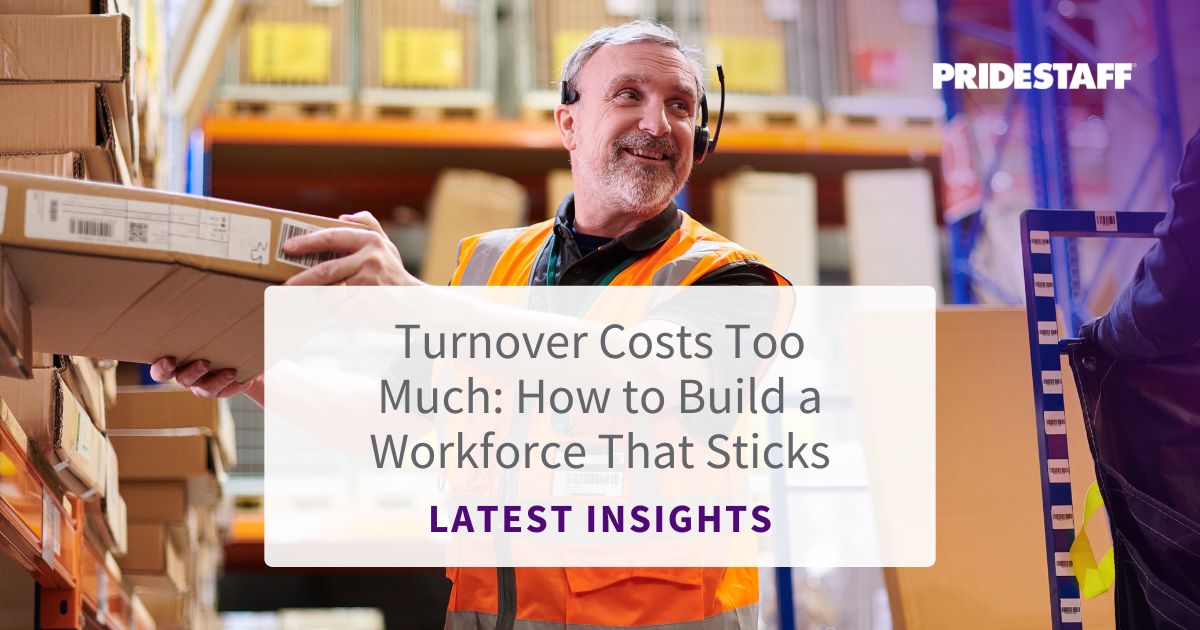
Turnover Costs Too Much: How to Build a Workforce That Sticks
Cultural fit significantly impacts each employee’s success within your organization. Alignment between the employee’s values, beliefs, and behaviors and your company’s core values and practices affects long-term employee satisfaction, productivity, and retention.
Adherence to the shared beliefs, norms, and practices that define how work is accomplished within your organization impacts each employee’s collaboration and contributions. Strong cultural alignment supports long-term retention, reducing turnover costs.
Importance of Cultural Fit
Cultural fit reduces turnover costs in the following ways:
- Better team cohesion: Teams that share values and follow norms generally collaborate well. Open communication clarifies expectations, increasing understanding and performance.
- Greater productivity: Employees who are comfortable with how things are done usually complete their tasks by the deadline. Providing timely, quality work helps reach company goals.
- Enhanced job satisfaction: Cultural alignment elevates satisfaction with the work environment. Connection to the company’s values leads to higher job satisfaction and employee morale.
- Increased employee retention: Strong connections to the organization encourage employees to remain long-term. Alignment with business goals and a sense of belonging reduce turnover costs.
- More brand ambassadors: Employees who embody the culture speak positively about the organization. Enhancing the company’s reputation attracts like-minded candidates, strengthening talent pipelines.
Tips to Assess Cultural Fit in Hiring
The following strategies can help you evaluate cultural fit while hiring to reduce turnover costs:
- Define your company culture: Clarify your company’s mission, vision, values, and norms. Ensure your hiring team understands and communicates them to candidates.
- Conduct behavioral interviews: Ask interview questions that gauge how candidates approached situations similar to those within your organization. Determine whether the candidates behaved in ways that align with your culture. For instance, if collaboration is a company value, ask candidates to describe a time when they worked as a team to attain a common goal.
- Complete cultural fit assessments: Cultural fit assessments provide insights into how well a candidate’s values, beliefs, and personality align with the company’s values and norms.
- Prioritize onboarding: Ensure your onboarding process reinforces the company’s mission, vision, values, and norms. Provide ongoing communication, training, and company events to maintain alignment.
How PrideStaff Ensures Cultural Fit
PrideStaff’s talent sourcing approach identifies your ideal employee and sources talent to fit your unique requirements. We efficiently and effectively improve hiring outcomes with three simple steps:
- Develop Map: We document job profiles, interview current employees, conduct job shadowing analysis, and administer all benchmarking evaluations to create the blueprint for your ideal hire.
- Evaluate vs. Map: We source talent around your key hiring requirements and evaluate against the map, then use interviews, skills tests, assessment tests, and reference checks to validate each candidate.
- On Target Candidate: Candidates who meet or exceed the map requirements are referred to you for final assessment.
Partner with PrideStaff to Build a Workforce That Sticks
If your company wants to reduce turnover costs, emphasize cultural fit in your hiring process. Let PrideStaff use our three-step approach to help you find candidates whose values and beliefs align with your company’s values and norms.
Contact your local PrideStaff office today to hire qualified employees who remain long-term, reducing turnover costs and strengthening your bottom line.
Related Posts:
Three Ways to Reduce Your Employee Turnover