Skills-Based Hiring: Why Employers Are Rethinking Traditional Recruiting
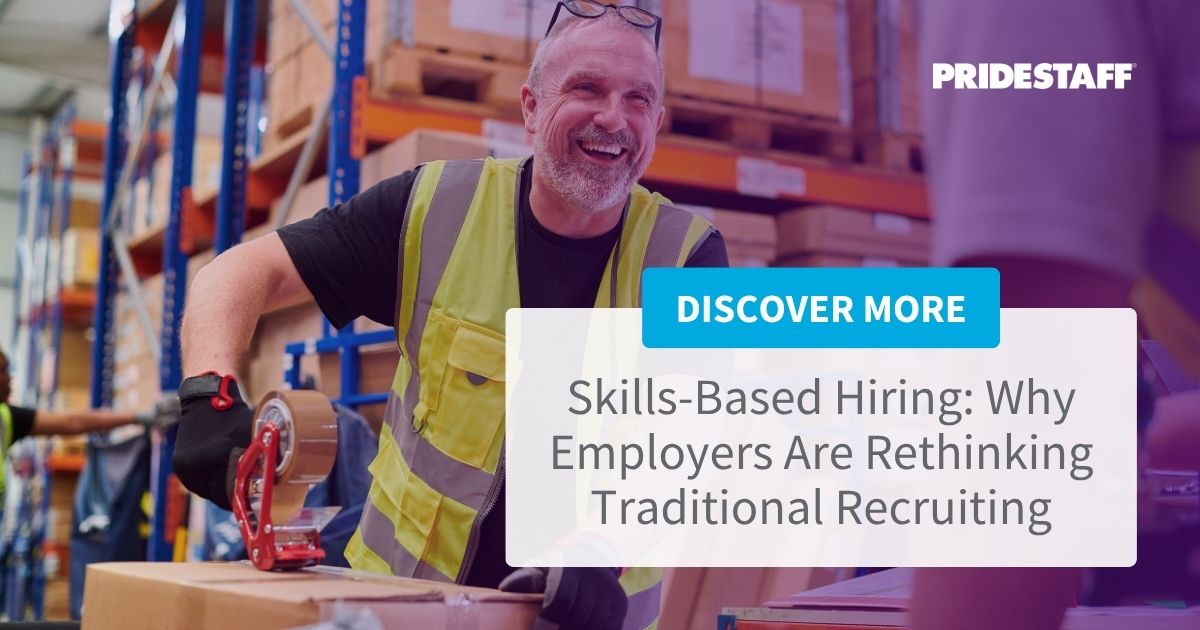
Talent shortages and hiring slowdowns are encouraging talent acquisition teams to rethink traditional recruiting. Rather than focusing on candidates’ education and experience, many teams are prioritizing skills-based hiring.
Talent acquisition teams are realizing candidates have more to offer than paper credentials. Determining the value a candidate can add to the company is becoming more important than whether they graduated from college.
What Is Skills-Based Hiring?
Skills-based hiring emphasizes a candidate’s abilities over their education. Hard skills such as accounting and coding, as well as soft skills such as communication and problem-solving, are more important than whether job seekers earned a college degree.
Benefits of Skills-Based Hiring
The benefits of skills-based hiring include:
- Wider talent pools: Removing biases in the hiring process and focusing on each candidate’s abilities diversifies the workforce.
- Improved job fit: Matching candidates with the right skills to the right role strengthens employee engagement and retention.
- Continuous learning opportunities: A skills-based culture encourages employees to engage in professional development, supporting internal mobility.
- Stronger business performance: Hiring employees with the skills to quickly provide value leads to greater productivity and company performance.
Use of Artificial Intelligence in Skills-Based Hiring
Artificial intelligence (AI) strengthens skills-based hiring in these ways:
- Real-time market insights: AI ensures that hiring strategies anticipate and change with market trends.
- Skills matching: Because AI understands the intent of a word more clearly than a traditional search engine, the technology can effectively uncover relevant skills.
- Adaptive candidate journeys: Because AI responds in real-time to candidates’ and employees’ input, the assessments can scale in difficulty to match a candidate’s skill level, and existing employees with relevant skills can be flagged for jobs in different departments.
- Hiring bias mitigation: AI can identify when specific demographics are regularly overlooked, ensuring they receive adequate focus when making hiring decisions.
Tips to Implement Skills-Based Hiring Practices
Talent acquisition teams can consider the following five questions to help implement skills-based hiring practices:
- Does the company provide new opportunities for existing employees? Filling a role externally can mean missing out on existing talent with the right skill set. Creating a skills database helps employers better understand the skills they already have within the organization and sets employees up for success.
- Do the job descriptions focus on the key skills required for the job? A job description should list necessary and preferred skills, and use inclusive language to attract diverse, qualified candidates. College degrees should be included only when necessary or as a regulatory requirement for the role.
- Are the job postings promoted in channels that widen the talent pipeline? Companies must source talent through multiple channels, such as job boards and partnerships with organizations, to reach new talent pools.
- Does the interview process effectively assess the essential skills? Interview questions should focus on a candidate’s competencies and personality to anticipate how they might perform in the role. Recruiters should work with hiring managers to create practical assessments that enable candidates to demonstrate the key skills needed for success.
- Are employee success stories being highlighted? Highlighting the successes of employees without degrees can reduce prejudices around credentials. Promoting the positive impacts of skills-based hiring encourages a more diverse range of candidates to apply in the future.
Need Help Implementing Skills-Based Hiring?
Skills-based hiring emphasizes a candidate’s abilities rather than their education. The benefits include wider talent pools, improved job fit, continuous learning opportunities, and stronger business performance.
The use of AI strengthens skills-based hiring. Learning how to hire based on skills enables you to start the process.
Contact your local PrideStaff office today to hire employees with the skills required to help drive business success.
Related Posts: